Blog

  • தமிழ் மெய் எழுத்துக்கள் Tamil Consonants

    பிரிவுகள்

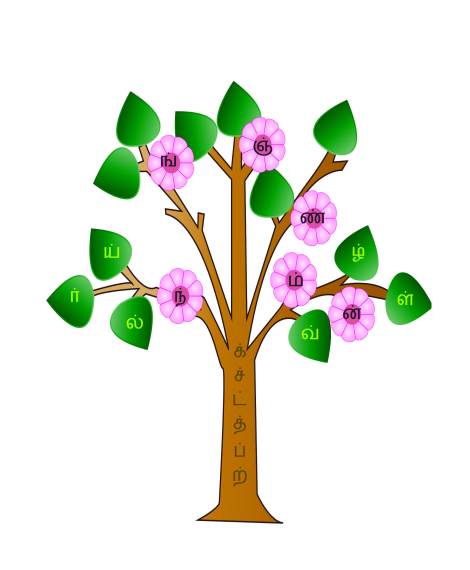
    தமிழ் மெய் எழுத்துக்கள் நம் மொழியின் உடலாகக் கருதப் படுகின்றன. மெய் எழுத்துக்களை ஒரு மரத்திக்கு ஒப்பிடுவோம். அடிமரம், இலைகள், பூக்கள் என்று ஒரு மரத்தை மூண்று முக்கியப் பாகங்களாகப் பிரிக்கலாம். அடிமரம் தொடுவதற்குக் கடினமாக இருக்கும். பூக்கள் தொடுவதற்கு மிக மென்மையாக இருக்கும். இலைகளின் இழையமைப்பு இரண்டிற்கும் இடைப்பட்டதாக இருக்கும்.
    ஒரு மரத்தைப் போலவே தமிழ் மெய் எழுத்துக்கள் அவற்றின் ஒலிக்கும் தன்மை கொண்டு மூன்று வகையாகப் பிரிக்கப் படுகின்றன.
    மெய் எழுத்துக்கள் தங்களின் ஒலியைப் பொறுத்து வல்லினம், மெல்லினம்,இடையினம் என்று மூன்று வகைகளாகப் பிரிக்கப்படும். வல்லின எழுத்துக்கள் ஆறு. க்,ச்,ட்,த்,ப்,ற் வல்லின எழுத்துக்களாகும். இந்த எழுத்துக்களின் உச்சரிப்ப்பு வலுவான மூச்சுக்காற்று கொடுக்கும் அழுத்தத்தால் வலுமையாக இருக்கும். மெல்லின எழுத்துக்களும் ஆறு தான். ங்,ஞ்,ண்,ந்,ம்,ன் ஆகியவை மெல்லின எழுத்துகள் ஆகும். மெல்லிய ஓசைக் கொண்ட இந்த எழுத்துக்களை ஒலிக்க அதிக முயற்சி தேவையில்லை இடையின எழுத்துக்களும் ஆறு எழுத்துக்கள் தான். ய்,ர்,ல்,வ்,ழ்,ள் ஆகியவை இடையின எழுத்துக்கள். இந்த எழுத்துக்களை ஒலிக்கத் தேவையான முயற்சி நடுத்தரமாக இருக்கும். ஒலி ஓசையும் கடினமாகவோ அல்லது மென்மையாகவோ இல்லாமல் இடையில் வரும்.
    மெய் எழுத்துக்களின் பிரிவுகள்

    Categorization

    The Tamil consonants forms the body of the language. Think of the consonants as tree. The tree has three main parts. The trunk, the leaves and the flowers. The tree trunk is the hardest to touch, The flowers have the softest texture,and the leaves have a in-between texture.
    Like a tree tamil consonants are divided in to three groups based on the way we pronounce them. Each group has six letters.
    The consonants are categorized based on how hard or soft they pronounce. க்,ச்,ட்,த்,,ப்,ற் letters have a hardness to the sound when we pronounce them. They are called vallinam. ங்,ஞ்,ண்,ந்,ம்,ப் letters have a softness to the sound when we pronounce and does not require a lot of effort. They are called mellinam. The lettersய்,ர்,ல்,வ்,ழ்,ள் have a sound that is in-between hardness and softness. They are called idaiyinam.

  • மெய் எழுத்துக்களை எழுதுவது/ Wriitng the consonants

    தமிழ் மெய் எழுத்துக்களை எழுதும் பயிற்சி

    தமிழ் மெய் எழுத்துக்களை எழுதுவதே ஒரு கலை.  பார்வைக்கு எழுதுவது கடினமாகத் தோன்றினாலும்  ஒரு வரி வடிவ  ஓவியமாக இவற்றை எழுதி விடலாம்.  கீழே உள்ள படங்கள்  மெய் எழுத்துக்களை எழுதுவதற்கு  உதவி செய்யும். முயன்று பார்கள். சித்திரமும் கைப் பழக்கம் என்று சொல்வார்கள். என்னைப் பொறுத்தவரை தமிழ் எழுத்துக்களை  எழுதிப் பழகினாலே  சித்திரம் வரையும் கலை தானாய் நமக்கு வந்து விடும்.

    முயன்று பாருங்கள்!

    Practice writing Tamil consonants

    Writing Tamil consonants is an art. The letters look hard to write but one can draw them as a line drawing easily. It is said that the art of drawing comes with practice, but for me practicing the Tamil letters itself will give you the art of drawing will come naturally.

    Try it

  • தமிழ் மெய்யெழுத்துக்கள்/ Tamil Consonants

    தமிழ் மெய் எழுத்துக்கள்

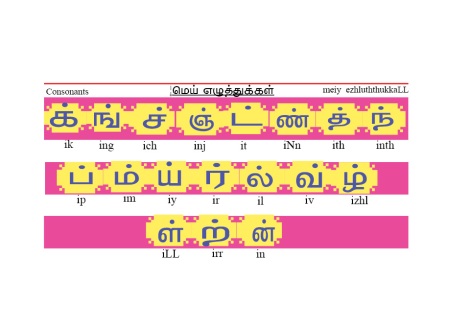
    உயிர் எழுத்துக்கள் அடிப்படை ஒலி வடிவமாக  தமிழ் மொழிக்கு உயிர்  கொடுக்கின்றன. அந்த உயிர் ஒலிகளைத் தாங்கிச் சொற்களை வடிவமைக்க உதவுவது மெய் எழுத்துக்கள். உயிருக்கு உடல் உதவுவது போல இவை இயங்குவதால் இவை மெய் எழுத்துக்கள் என அழைக்க்கபடுகின்றன..  மெய் எழுத்துக்கள்  உயிர் எழுத்துக்களை சார்ந்து இயங்கும் அவை தனியாக இயங்க இயலாது. மெய் எழுத்துக்கள் பதினெட்டு. அவை

    1. க்
    2. ங்
    3. ச்
    4. ஞ்
    5. ட்
    6. ண்
    7. த்
    8. ந்
    9. ப்
    10. ம்
    11. ய்
    12. ர்
    13. ல்
    14. வ்
    15. ழ்
    16. ள்
    17. ற்
    18. ன்

    ஆகும் இவை ஒலிப்பதற்கு அரை மாத்திரை அதவாது அரை வினாடி நேரம் எடுத்துக் கொள்கின்றன. அதனால் அவை ஒற்று என்றும் அழைக்கப் படுகின்றன.

     Tamil consonants with their pronounciation  in English
    Tamil consonants

    Tamil Consonants

    Tamil Vowels give shape to the basic sounds thus they breathe life to the Tamil Language. Tamil consonants helps the vowels to create the structure for the words. If vowels are life to the language , the consonants act as a body to the language. There are eighteen consonants in the Tamil language. They are

    1. ik (க்)
    2. ing (ங்)
    3. ich (ச்)
    4. inj (ஞ்)
    5. it (ட்)
    6. iNn (ண்)
    7. ith(த்)
    8. inth (ந்)
    9. ip (ப்)
    10. im (ம்)
    11. iy (ய்)
    12. ir (ர்)
    13. il (ல்)
    14. iv(வ்)
    15. izhl (ழ்)
    16. ILL (ள்)
    17. irr(ற்)
    18. in (ன்)

    They take half a second to pronounce. They are called ottru.

  • உயிரெழுத்துக்களின் வரிசை

    உயிரெழுத்துக்களின் வரிசை

    தமிழ் மொழி ஒலிக்கு வடிவம் கொடுப்பதாலேயே இன்றும்  செயல் பாட்டில் இருந்து வருகிறது. நாம் அடிப்படையாக எழுப்பும் ஒலியின் வடிவமே தமிழ் உயிரெழுத்துக்களாக வடிவம் கொண்டுள்ளன.
    அந்த ஒலியின் அடிப்படையிலேயே உயிர் எழுத்துக்களின் வரிசையும் அமைந்துள்ளது. ஆங்கிலத்தில் a,e,i o u என்ற எழுத்துக்களின் ஒலி வரிசையை எடுத்துக் காட்டாகக் கொண்டால்  உயிர் எழுத்துக்களின் வரிசையை நம்மால் எளிதாகக் கற்றுக் கொள்ள முடியும்.

    “அ” என்ற எழுத்து  உயிரெழுத்துக்களின் முதல் எழுத்து. இதைத் தொடர்ந்து அதன் நீண்ட ஒலியான “ஆ” வருகிறது.. அடுத்து வருவது “இ” என்ற ஒலி அதைத் தொடர்ந்து வருவது “ஈ” என்ற எழுத்து நீண்டு ஒலிக்கிறது.    தமிழில் “உ” என்ற ஒலியின் குறிலும் நெடிலும் “எ” என்ற ஒலியின் குறிலும் நெடிலும் அடுத்தடுத்து வருகின்றன. அஃதாவது உ,ஊ, எ, ஏ. ஆங்கிலத்தில் எ, ஏ எழுத்துக்களின் ஒலி வடிவத்திற்கென்று தனியாக வரி வடிவம்  இல்லை நாம் இங்கே குறித்துக் கொள்ள வேண்டும். “அ”, “இ” என்ற ஒலிகள் இணைவதால் வரும் ஒலி  “ஐ”என்று தமிழில் வரி வடிவம் பெற்று நீண்டு ஒலிக்கிறது,. அடுத்து வருவது “ஒ” என்ற ஒலியின் குறில், நெடில் வடிவங்களான “ஒ”,வும் “ஓ”வும். இறுதியாக “அ”வும் “உ”வும் இணைவதால் ஏற்படும் ஒலியின் வடிவம் ஓள. க்டைசி உயிரெழுத்தாக வருகிறது..இந்த ஒலிக்கும் ஆங்கிலத்தில் வரிவடிவம் தனியாக இல்லை என்பதை நாம் குறித்துக் கொள்ள வேண்டும்.

    தனி எழுத்தான ஆய்தத்தை உயிரெழுத்துகளோடு  சேர்த்துப் படிப்பது தமிழர்களின் வழக்கம்.

    A picture of Tamil vowels
    Order of Tamil vowels

    Order Of the Tamil Vowels

    Tamil language is a phonetic language. That is why it is still a very active language. The basic sound humans make has the taken the forms in Tamil vowels. If we take the English vowels as an example it is easy to learn the order of the Tamil vowels.

    The letter “அ” is the first letter in Tamil vowels. Then comes is long vowel form “ஆ” . Next comes the short sound “இ” It is followed by the letter “ஈ” which is the representation of longer e sound. The short and long vowels of the sound “உ” and “எ” comes next. That is உ,ஊ, எ, ஏ.. We have to note that in English there is not letter representation of the sound “ay”. When the “அ”, “இ” sounds combine they make the long vowel “ஐ”. The long and short sound of “ஒ” comes next as “ஒ”and “ஓ. When the sound of “அ” and “உ” it make the long vowel sound ஓள.. Here also note that this sound does not have the letter representation in the English language.

    Ayudham is always learnt with the vowels traditionally.

  • ஆயுதம் /Ayudham

    மூன்று புள்ளிகளைக் கொண்ட எழுத்து ஆய்த எழுத்து எனப்படும்.(ஃ)உயிரெழுத்துக்களோடும், மெய் எழுத்துக்களுடனும் சேராமல் தனியானது ஆய்தம் என்ற தனி எழுத்து. ஆனால் குழந்தைகள் கற்றுக் கொள்ளும் போது ஆயுதம் உயிர் எழுத்துக்களின் இறுதியில் வரும்.ஆய்த எழுத்துக்குத் தமிழ் மொழியில் ஒரு தனியிடம் உண்டு என்றாலும்  இந்த எழுத்து வரும் சொற்கள் மிகக் குறைவு.

    Aayudham looks like three dots (ஃ).It does not belong with vowels or consonants,but when children are learning it always comes at the end of Tamil vowels.Ayudham has a very unique place in the tamil Language yet it’s uses are very minimal.

  • உயிர் எழுத்துக்களில் குறிலும் நெடிலும் Short and Long Vowels

    தமிழ் இலக்கணத்தின் மற்றுமொரு முக்கியமான பகுதி தமிழின் ஓசை வடிவமாகும். தமிழ் எழுத்துக்கள் ஒவ்வொன்றும் தனக்குரிய ஒலி வடிவைப் பெற்றுள்ளன. அதனால் எழுத்துக்கள் ஒலிப்பதற்கான நேர அளவீடை நாம் புரிந்து கொல்ளுதல் அவசியம். இந்த நேர அளவீடு தமிழ் இலக்கணத்தில் மாத்திரை எனப்படும் நாம் கை நொடிக்கும் நேரம் அல்லது இயல்பாக கண் சிமிட்டும் நேரம் ஒரு மாத்திரை என்று அழைக்கப்படுகிறது.

    ஒலிப்பதற்கு ஒரு மாத்திரை அல்லது ஒருவினாடி எடுத்துக் கொள்ளும் எழுத்துக்கள் குறில் என்று அழைக்கப்படும். ஒரு எழுத்து ஒலிக்க இரண்டு வினாடிகள் எடுத்துக் கொண்டால் அவை நெடில் என்று அழைக்கப்படும். சில எழுத்துக்கள் ஒலிப்பதற்கு அரை வினாடியே எடுத்துக் கொள்ளும் அவை ஒற்று என்று அழைக்கப்படும், உயிரெழுத்துக்களில் அ, இ , உ, எ,ஒ என்ற எழுத்துக்கள் ஒலிப்பதற்கு ஒரு மாத்திரை அளவே எடுத்துக் கொள்வதால் அவை குறில் எழுத்துக்களாகும். ஆ, இ,ஊ,ஏ,ஐ,ஓ,ஒள என்ற எழுத்துக்கள் நெடில் என்று அழைக்கப்படும்.

     a picture short_long Tamil Vowels
    A poster for short_long Tamil Vowels

    Another important thing to understand in the Tamil grammar is the duration of the letters. Tamil being a phonetic language every sound has letter form representation. The English word syllable is the right way to explain how each letter of the Tamil language has its own sound. By learning the phonetic value of the letters one can easily start to read the language. The pronunciation of these letters depends upon how long it takes to make the particular sound. The unit of measure is called a Mathirai. A mathirai is the time it takes to snap your fingers or blink your eyes naturally. It is usually a second.

    So when we take a second to sound a letterout, that letter is called kurrill. When we take two seconds to sound out a letter it is called neddill. Then there are some letters that needs only half a second to pronounce. These letters are called ottuRRu. In vowels, the letters அ, இ, உ, எ, ஒ are kurril. These five tamil letters are short vowels. These need only one second to pronounce. In vowels the letters ஆ, ஈ, ஊ, ஏ,ஐ, ஓ, ஒள are called neddill. These need two seconds to pronounce. These seven tamil letters arelong vowels.

  • உயிரெழுத்தைக் கண்டு பிடியுங்கள்/ Find the Vowels

    கீழே உள்ளப் படங்களில் உயிர் எழுத்துக்கள் ஒளிந்து உள்ளன. எழுத்துக்களை வண்ணம் தீட்டினால் ஒளிந்து இருக்கும் எழுத்தைக் கண்டு பிடிக்கலாம்  நாம் வாயால்  எழுத்துக்களைச உச்சரித்துக் கொண்டே  வர்ணம் தீட்டினால் எழுத்தின் வடிவமும் ஒலியும் மனதில் பதியும்.

    The Tamil vowels are hiding in the pictures below. Color all the small letters i to find the letter that is hidden If we pronounce the letter as we color we can remember both the shape and sound of the letter.

error: Copyrights: Content is protected !!