Blog

  • தமிழ் மாணவர்களுக்கு எண்ணியியல் மின்னியல் அட்டையின் முக்கியத்துவம்:

    இரண்டு வெவ்வேறு மொழிகளில் வாசிப்ப்பையும் எழுதும் திறனையும் வளர்ப்பது மாணவர்களுக்கு ஒரு பெரிய சவாலாக இருக்கும். புலம்பெயர்ந்த தமிழ் குழந்தைகளில் பலர் தமிழ் வகுப்புகளில் பெற்றோர்களின் ஊக்குவிப்பால் மட்டுமேக் கலந்துகொள்கிறார்கள், எனவே மாணவர்களை வகுப்பில் ஈடுபாட்டுடன் வைத்திருப்பது மிகவும் முக்கியம். எண்ணியியல் மின்னலட்டைகள் மாணவர்களின்  தமிழ் கற்றலுக்கானத் தொடர்பை  அதிகரிக்கத்து அவர்களின் தமிழ் கற்றலுக்கு ஊக்கம் கொடுக்கும் வளமாக அமைகிறது.

    மின்னியல் மின்னலட்டைகளைப் பற்றி:

    இந்த மின்னியல் மின்னலட்டைகள்  ‘அ’ வார்த்தைகள், ‘ஆ’  சொற்கள்,இரண்டையும் எண்ணியியல் அட்டை வடிவத்தில் வழங்குகிறது. மற்ற பல மின்னியல் மின்னலட்டைகளைப் போல இல்லாமல், இந்த அட்டைகளுக்கு கற்பவர்கள் தங்கள் பதில்களை தமிழில் தட்டச்சு செய்ய வேண்டும். இதனால் மாணாக்கர் தமிழில் எழுதும் கலையைக் கற்கின்றனர்.

    முந்தையப் பதிவில் பரிந்துரைக்கப்பட்டபடி ஆறு நாட்களுக்கு அச்சு மின்னலட்டைகளைப் பயன்படுத்தும்போது, தாங்கள் கற்றதை மாணவர்கள் மீள்பார்வை செய்யும்  திறமையை இந்த எண்ணியியல் மின்னலட்டைகள் வலுப்படுத்தும்.அது மட்டுமில்லாமல் மாணவர்கள் கற்றுக்கொண்டதை மீண்டும் நினைவு படுத்திக் கொள்ள உதவும்.

    இம்மின்னலட்டைகள் முக்கியமான எண்ணியியல் கல்வியறிவு திறன்களையும் ஆதரிக்கின்றன:

    • எழுத்துக்கலையின் ஒரு பகுதியாக தொழில்நுட்பத்தைப் பயன்படுத்த மாணவர்களை ஊக்குவிக்கின்றன.
    • முதல் மொழி எழுத்தறிவு திறன்களையும் தமிழ் மொழியின் எழுத்தறிவையும் இணைக்க உதவுகின்றன.
    • தமிழ் தட்டச்சு செய்வதில் விழிப்புணர்வு இல்லாதக் குழந்தைகளுக்குத் தமிழ் விசைப்பலகை பயிற்சியை அவர்கள் இம்மின்னியியல் மின்னலட்டைகள் அறிமுகப்படுத்துகின்றன.

    இந்த அணுகுமுறை முதல் மொழி அறிவிற்கான முக்கியத் தரக்கூறுகளுடன் ஒத்துப்போகிறது, முதல் மொழி தரக்கூறுகள்  மழலையர் பள்ளியில் தங்கள் கருத்தை எண்ணியில் முறையில் தட்டச்சு செய்யவும் வெளியிடவும் எண்ணியியல் கருவிகளைப் பயன்படுத்த மாணவர்களை ஊக்குவிக்கிறது.  மூன்றாம் வகுப்பில் மாணவர்கள் முதல் மொழிவிசைப்பலகை திறன்களை வளர்க்கத் தொடங்குகிறார்கள்; நான்காம் வகுப்பில்அவர்கள் ஒரே அமர்வில்முதல் மொழியில் ஒரு பக்கத்தைத் தட்டச்சு செய்ய வேண்டும் என்றும்; ஐந்தாம் வகுப்பில் தொடர்ச்சியாக இரண்டு பக்கங்கள் தட்டச்சு செய்ய வேண்டும் என்றும் எதிர்பார்க்கப்படுகின்றது.

    முக்கியமாக ,பல புலம்பெயர்ந்த தமிழ் குழந்தைகள்  தமிழ் சமூக நிகழ்வுகளின்  மூலமாகத் தமிழ் மொழியை அனுபவிக்கிறார்கள், எனவே தமிழ் தட்டச்சு பற்றிய விழிப்புணர்வும் ஒருங்குறி தட்டச்சு செய்வதின் இன்றியமையாமையும் அவர்களுக்குப் பெரும்பாலும் குறைவாகவே உள்ளது. இந்த எண்ணியியல் மின்னலட்டைப் பயிற்சிகளின் மூலம் தமிழ் ஒருங்குறி விசைப்பலகை திறன்களை வளர்ப்பதற்கான நடைமுறை வழியை வழங்குகின்றன, அதே நேரத்தில் மொழி கற்றலையும் வலுப்படுத்துகின்றன.

    குறிப்பு: இந்த  எண்ணியல் மின்னலட்டைப் பயிற்சிகளை முடிக்க மாணவர்களுக்கு தமிழ் ஒருங்குறித் தட்டச்சு தெரிந்திருக்க வேண்டும்.

    தாய்மொழி கையகப்படுத்தல் நம் குழந்தைகளின்கல்வியறிவை வேறு பரிமாணத்திற்கு கொண்டு செல்கிறது. எனவே தங்களின் அன்றாட நடவடிக்கைகளில் தமிழைக் கற்றுக்கொள்ளவும் பயிற்சி செய்யவும் நம் இளையோர்களை ஊக்குவிப்போம்.

    Digital Flashcards Matter for Tamil Learners

    Developing reading and writing skills in two very different languages can be challenging for learners. Many children in the Tamil diaspora attend Tamil classes because their parents encourage them to do so, so keeping them engaged is especially important. Digital flashcards can increase interaction with learning materials and make practice more active and motivating.

    About This Activity:

    This activity presents அ words and ஆ words in a digital postcard format. Unlike many other digital flashcards, these cards require learners to type their answers in Tamil, which adds an active writing component to the exercise.

    When used alongside the printable flashcards for six days as suggested, these digital flashcards can strengthen retrieval practice and help learners remember what they have learned.

    They also support important digital literacy skills:

    •              They encourage learners to use technology as part of the writing process.

    •              They help bridge first-language literacy skills and Tamil language learning.

    •              They introduce Tamil keyboarding practice for children who have limited exposure to Tamil typing.

    This approach aligns with Common Core writing standards, which encourage students to use digital tools to produce and publish writing from kindergarten onward. By Grade 3, students begin developing keyboarding skills; by Grade 4, they are expected to type one page in a single sitting; and by Grade 5, that expectation increases to two pages.

    Many diaspora Tamil children mainly experience the language through community events, so their exposure to Tamil typing is often limited. These digital flashcard exercises provide a practical way to build Tamil Unicode keyboarding skills while reinforcing language learning.

    Note: Students need to know Tamil Unicode typing to complete these flashcard exercises

    Native language acquisition takes the literacy of our learners to a different dimension. So let us  encourage our learners to learn and practice Tamil in their everyday activities.

  • தமிழை ஆழமாகக் கற்க உதவும் மின்னலட்டைகள்:

    தமிழை ஆழமாகக் கற்க உதவும் மின்னலட்டைகள்:

    தமிழ் மொழியைத் தங்களின்  இரண்டாம் மொழியாகக் கற்க தமிழ் வகுப்பிற்கு வரும் புலம்பெயர் தமிழர்களில் மூன்று வெவ்வேறு வகைகளைக் காணலாம்.

    1. தொடக்கப் பள்ளி மாணவர்கள்,
    2. நடுநிலை, உயர்நிலைப் பள்ளி குழந்தைகள்
    3. பெரியவர்கள்.

    இவர்களின் முதல் மொழியின் அறிவும் அனுபவமும் வேறுபடுகின்றன. ஒரு தொடக்கப் பள்ளி குழந்தை முதல் மொழியில் கற்கும்போது  சொற்களில் உள்ள எழுத்துக்களைத் தெரிந்து கொள்ளவும், எழுத்துக்களைக் கூட்டிச் சரியான உச்சரிப்புடன் வாசிக்கவும் கற்றுக் கொண்டு இருப்பர். அதே நேரத்தில் நடுநிலை, உயர்நிலைப் பள்ளி மாணவர்கள் தங்கள் முதல் மொழியில்  வாசித்தல், எழுதுதல், புரிந்து படித்தல், தங்களின் கருத்துகளைப் புலமையுடன் வெளிப்படுத்துதல் ஆகிய திறன்களில் முழுமையான அறிவைக் கொண்டிருக்கக் கூடும்.இம்மாணவர்கள் தங்களின் பகுப்பாய்வு திறனில் மொழிப்பயிற்சியை கற்றுக் கொண்டு இருக்கலாம்.

    பள்ளிக்குக் குழந்தைகளை அழைத்து வரும் பெற்றோர் தங்களின் முதல் மொழியிலும் தமிழ் மொழியிலும் கற்றுத் தேர்ந்தவர்களாக  இருக்கலாம்.

    புலம்பெயர் தமிழ் வகுப்புக்களின் கல்வி வளங்கள் இந்த மூன்று வேறுபட்ட நிலைக்கும் பொருந்தி வர வேண்டும்.

    தமிழ் இணையக் கல்விக்கழகம் தமிழ்நாடு கல்வித் துறை ஆகியவற்றின் பாடப்புத்தகங்கள், தமிழ் எழுத்துக்களையும் சொற்களையும் பார்வை புலன், செவிப்புலன் ஆகியவை வழியாக மனப்பாடம் செய்வதற்கானக் கற்றல் முறையை அணுகுகின்றன. தமிழ் எழுத்துக்களைச் சொற்களைச் சித்திரச்சொற்களாக மாணவர்களுக்கு அறிமுகம் செய்கின்றன.

    இதற்கு மாறாக, அமெரிக்க பள்ளிகளில் ஒவ்வொரு நிலைகளுக்கும் மொழி அறிவிற்கான முக்கியத் தரக்கூறுகள் உள்ளன, இந்த முக்கிய தரக்கூறுகள்  சரளமான மொழிப்பயிற்சியை மாணவர்களிடையே ஊக்குவிக்கின்றன. இத்தரக் கூறுகளில் முக்கியமான சில

    1. நூல்களைக்கையாளுதல்,
    2. எழுத்துகளின் அமைப்பு,
    3. ஒலியியல் விழிப்புணர்வு,
    4. ஒலியியல்
    5. சொற்களை அறிந்து கொள்ளுதல்,  
    6. சொற்களை இடமிருந்து வலமாக, மேலிருந்து கீழாக  முதல் பக்கத்திலிருந்து அடுத்தப் பக்கத்திற்கு வாசித்தல்,
    7. சொல்லகராதித்திறனை வளர்த்துக் கொள்ளுதல்
    8. ஒரு உரையில் உள்ள தகவலைப் புரிந்து கொள்ளும்படியான வாசிப்புத் திறன், 
    9. கொடுக்கப்பட்ட உரையின் முக்கிய கருத்துகள்  கட்டமைப்புஇரண்டையும்  புரிந்துகொள்ளுதல்,
    10. உரையில் கொடுக்கப்பட்ட அறிவார்ந்த பொருண்மையையும்  யோசனைகளையும்  ஒருங்கிணைத்தல்,
    11. உரையாடும்போது தரத்திற்கு ஏற்றச் சொற்களைக் கண்டுபிடித்துப்  பயன்படுத்துதல்
    12. ஒரு வாக்கியத்தின் தனித்துவமான அம்சங்களை அங்கீகரித்தல்

    இவ்வாறு  வேறுபட்டத் தரக் கூறுகளைத் தங்களின் முதல் மொழி அனுபவமாகக் கொண்ட மாணவர்களின் மொழித்திறன், அமெரிக்கத் தமிழ் வகுப்பறையில் வேறுபட்டிருப்பதால், அவர்களுக்கு ஒரு விசாலமான கற்றல் கருவியாக இந்த மின்னலட்டைகள் பயன் படுகின்றன.

    மின்னலட்டைகள்  ஒவ்வோரு மாணவருக்கும் பல்வேறு வழிகளில் உதவுகின்றன; இளைய குழந்தைகள் தங்கள் பார்வைபுலன் மூலமான கற்றலை மேம்படுத்த இவ்வட்டைகளைப் பயன்படுத்தலாம். நடுநிலை, உயர்நிலை மாணவர்கள் தமிழ் எழுத்துக்களோடும் சொற்களோடும் ஆழமாக இடைவினையாற்றலாம். தங்களுக்கு தெரிந்த மொழி திறன்களான எழுத்துகளின் அமைப்பு, ஒலியியல் விழிப்புணர்வு, ஒலியியல், சொற்களை அறிந்து கொள்ளுதல்,   சொற்களை இடமிருந்து வலமாக, மேலிருந்து கீழாகப் பக்கத்திற்கு பக்கமாகப் வாசித்தல், சொல்லகராதியை  கையகப்படுத்தல், ஆகியத் திறன்களைத் தமிழ் மொழியிலும் பெற இந்த அட்டைகளைப் பயன்படுத்தலாம்

    தமிழ் வகுப்பறைக்கு வெளியே, பெற்றோர்கள் இந்த அட்டைகளைப் பயன்படுத்தி தமிழ் மொழி பயிற்சியைப் பிள்ளைகள் விரைவாகவும் அடிக்கடியும் செய்யப் பயன்படுத்தலாம்.

    முதல் பாடத்திற்கான இந்த மின்னலட்டைச் சொற்கள் ஒரு 8.5 x 11 அங்குல (215.9 × 279.4 மிமீ)  அளவு கொண்ட  ஒரு காகிதத்தில் பத்து சொற்களைக் கொண்டிருக்கும் வகையில் வடிவமைக்கப்பட்டுள்ளது.  இந்த ஆவணத்தில் இருபத்தி மூன்று வார்த்தைகள் உள்ளன.

    ஆங்கில மொழியில் எழுத்து வடிவங்களும்  அவ்வெழுத்துக்களைக் கூட்டி  ஒலியுடன் படிக்கும் முறையும் எழுத்துகளின் ஒலிகளை இணைத்து ஒரு வார்த்தையை உருவாக்கும் வகையும் தற்போது தொடக்கப்பள்ளிகளில் பயன்படுத்தப்படுகின்றன. அதற்காக அவர்கள் உயிரெழுத்துக்கள், மெய்யெழுத்துக்கள், ஒற்றை ஒலியுடைய ஈரெழுத்துகள் (digraphs) இணையுயிர்(diphthongs) மற்றும் பிற முறைகளைப் பயன்படுத்துகிறார்கள். தொடக்கநிலை மாணவர்கள் வாசிப்பு திறன்களைப் பயிற்சி செய்ய ஒலி அட்டைகளைப்(sound cards) பயன்படுத்துகிறார்கள்.

    தமிழ் மின்னலட்டைகளைப் பற்றிய சிறு குறிப்பு:

    தமிழ் கல்வியாளர்கள் இம்மின்னலட்டைகளை ஒலி அட்டைகளாகவும் பயன்படுத்தலாம். அட்டைகளிலில் உள்ள  வார்த்தையின் ஒவ்வொரு எழுத்தும் வண்ணக் குறியீடு மற்றும் அடிக்கோடிட்டுக் காட்டப்பட்டிருப்பதை தமிழாசிரியர் கவனிக்க வேண்டும். உயிரெழுத்துக்கள் இளஞ்சிவப்பு, மெய்யெழுத்துக்கள் நீலம், உயிர்மெய்யெழுத்துக்கள் ஊதா. இந்த நிற அமைப்பில் தமிழ் எழுத்துகள் மின்னலட்டைகளில்  காட்டப்பட்டுள்ளன. இக்கட்டமைப்பு ஒலியியல் விழிப்புணர்வு, ஒலியியல் ஆகியவற்றை எளிதாகவும் விரைவாகவும் மாணவர்களுக்குக் கொண்டு சேர்க்கின்றன.

    Vowels (உயிர் எழுத்துகள்): ஆங்கிலத்தில் ஐந்து அடிப்படை உயிரெழுத்து ஒலிகள் உள்ளன, இந்த ஒலிகள் குறுகியதாகவும் நீளமாகவும் இருக்கும்.  தமிழ்  உயிர் எழுத்துகள் ஒவ்வொன்றும் குறுகிய அல்லது நீண்ட உயிரெழுத்துக்களையும் அவற்றின் உச்சரிப்பு நீளத்தையும் வேறுபடுத்திக் காட்டும் வகையில் தனித்துவமான வடிவங்களைக் கொண்டுள்ளன. அ(/ă/), ஆ (/ā/), இ(/ĭ/), ஈ (/ē/), உ(/ŏ/), ஊ (/ū/) எ(/ĕ/), ஒ(/ŏ/).ஓ (/ō/).

    ஏ(/ay/), எழுத்து ஆங்கிலத்தில் இரு எழுத்துகளைக்  கொண்டு ஒலிக்கும். தமிழ் உயிரெழுத்துக்களில் இரண்டு இணையுயிர்கள் உண்டு.ஐ(/aɪ/) ஔ  (/aw/). ஆகிய  இரு எழுத்துக்கள் நீண்ட  உயிரொலி    இணையுயிர்களாகும். அ(/ă/)மற்றும் இ(/ĭ/) உயிரெழுத்து ஒலிகள் ஐ(/a ɪ/) எழுத்துக்குள் உள்ளன.  அ(/ă/) மற்றும் உ (/ŏ/) உயிரெழுத்து ஒலிகள்  ஐ,ஔ அசையில் உள்ளன. இந்த இரண்டு ஒரே உயிரொலியையுடைய இணையுயிர்கள் நீண்ட உயிரெழுத்துக்களாகும்.

    தமிழ் மொழியில் ஐந்து குறுகிய உயிரெழுத்துக்களும் ஏழு நீண்ட உயிரெழுத்துக்களும் உள்ளன. உயிரெழுத்துக்களை உச்சரிக்க ஒரு வினாடிஎடுக்கும்போது, அவை குறுகிய உயிரெழுத்துக்கள் இக்குறுகிய எழுத்தொலிகள் குறில் எனப்படுகின்றது. ஒரு அடிக்கோடு அந்த எழுத்து ஒரு குறுகிய ஒலி  உடையது அதாவது குறில் என்று மாணவர்களுக்கு அடையாளம் காட்டுகின்றது.. உயிரெழுத்துக்களை உச்சரிக்க இரண்டு வினாடிகள் ஆகும்போது, அவை நீண்ட உயிரெழுத்துக்கள் அல்லது நெடில் எனப்படுகின்றன.  இந்நீண்ட நெடில் உயிர் எழுத்துகளை இரட்டைக் கோடுகள் அடையாளம் காட்டுகின்றன.இரட்டை அடிக்கோடிட்டுக்களைக் கொண்ட எழுத்து என்பது நீண்ட ஒலி என்று பொருள்.

    Consonants (மெய் எழுத்துக்கள்): தமிழில் பதினெட்டு மெய்யெழுத்துக்கள் உள்ளன. தமிழ் மெய்யெழுத்துக்களுக்கு மேலே ஒரு வட்டம் அல்லது புள்ளி உள்ளது. மெய்யெழுத்துக்களை உச்சரிக்க அரை வினாடி ஆகும். ஒலி எங்குத் தொடங்குகிறது என்பதைப் பொறுத்து மெய்யெழுத்துக்கள் மூன்று தனித்துவமான வழிகளில் பெயரிடப்படுகின்றன.இவ்வெழுத்துகளின் உச்சரிப்பு மார்பு, தொண்டை அல்லது மூக்கிலிருந்து உருவாகிறது.

    கடினமான ஒலி எழுத்துகள் க், ச், ட், த், ப், ற் (வல்லினம்):மார்பிலிருந்து அழுத்தத்துடன் தொடங்குகின்றன. இவை வல்லின எழுத்துகள் எனப்படுகின்றன. மின்னலட்டையில்  எழுத்துகளின் அடியில் உள்ள தடிமனான கோடுகள் கடினத்தன்மையைக் காட்டுகின்றன.

    மென்மையான ஒலி  எழுத்துக்கள் . ங், ஞ், ண், ந், ம், ன் (மெல்லினம்):குறைந்தபட்ச  முயற்சியுடன் நாசி ஒலிகளாக  உச்சரிக்கப்படும் எழுத்துகள்  மெல்லினம் எனப்படுகின்றன.  மின்னலட்டையில்  எழுத்துகளின் அடியில் உள்ள அலை அலையான கோடுகள் எழுத்து உச்சரிப்பின் மென்மையைக் காட்டுகின்றன

    இடை ஒலிகளைக் கொண்ட எழுத்துக்கள் ய், ர், ல், வ், ழ், ள் (இடையினம்) தொண்டையிலிருந்து தொடங்குகின்றன, தொண்டை மார்புக்கும் மூக்கிற்கும் இடையில் உள்ளது, எனவே அவை “இடையினம்” என்று குறிப்பிடப்படுகின்றன. மின்னலட்டையில்  எழுத்துகளின் அடியில் உள்ள புள்ளியிடப்பட்ட கோடுகள் இடையொலிப் பண்புகளைக் குறிக்கின்றன.

    உயிர்மெய்யெழுத்துக்கள்: உயிரெழுத்துக்களை மெய்யெழுத்துக்களுடன் சேர்க்கும்போது, அவை அவற்றின் சொந்த வடிவத்தையும் ஒலியையும் பெறுகின்றன. இந்த எழுத்துக்கள் உயிர்மெய்யெழுத்துக்கள் என்று அழைக்கப்படுகின்றன. உயிரெழுத்துக்களுடன் மெய் எழுத்தின் தொடர்பு காரணமாக, உயிர்மெய் எழுத்துக்களும் குறுகிய அல்லது நீண்ட உச்சரிப்புகளைக் கொண்டுள்ளன. இங்குக் குறுகிய உச்சரிப்புகள் ஒரு அடிக்கோடிட்டுக் குறிக்கப்படுகின்றன,  நீண்ட உச்சரிப்புகள் இரட்டை அடிக்கோடுக்களால் குறிக்கப்படுகின்றன ஒரு  எழுத்தின்  ஆரம்ப ஒலி எங்குத் தொடங்குகிறது என்பதன் அடிப்படையில் உயிர்மெய் எழுத்துகள் அவற்றின் பெயரைப் பெறுகின்றன. உயிர்மெய் எழுத்துகளின் ஒலியின் தன்மையைக் காட்டும் வகையில்  மின்னலட்டையில் எழுத்துகளின் அடியில் கோடுகள் தடிமனாகவோ அலை அலையாகவோ  புள்ளிக்  கோடிட்டோ இருக்கின்றன.

    மின்னலட்டைகளைப் பயன்படுத்தும் முறை:

    வகுப்பறையை விட்டு வெளியேறிய பின்னரும் தமிழ் மொழி பயிற்சி செய்ய இந்த மின்னலட்டைகள் உதவுகின்றன.

    நாள் 1

    மாணவர்கள் வார்த்தையைச் சத்தமாகப் படிக்க வேண்டும்.

    நாள் 2

    மின்னலட்டையை ஒலி அட்டையாகப் பயன்படுத்தவும். ஒவ்வொரு எழுத்தையும் சரியான கால அளவுடன் உச்சரித்துப் பார்க்கவும். உயிரெழுத்து மெய்யெழுத்துக்கள் (உயிர்மெய்) எழுத்துக்கள் என்ன என்பதை மாணவர்கள் இன்னும் கற்றுக்கொள்ளாமல் இருக்கலாம். ஆனால் அவர்களின் முதல் மொழி திறன்கள் தமிழ் சொல்லைச் சரளமாக வாசிக்க உதவுகின்றன.

    நாள் 3

    முதல் இரு நாட்களின் பயிற்சிகளை மீள்பார்வை செய்யவும்.

    நாள் 4

    ஒவ்வொரு எழுத்தையும் சரியான கால அளவுடன் உச்சரிக்கவும், அவை சரியான கால அளவில் வார்த்தையை உச்சரிக்க எத்தனை நொடிகள் ஆகின்றது என்று கணக்கிடவும்.

    நாள் 5 

    ஒலிபெயர்ப்பு வண்ண குறியீடு இரண்டு ஆதரவுமின்றி  வார்த்தையைப் படிக்கவும் எழுதவும் முயற்சி செய்ய வேண்டும்..

    நாள் 6

    மின் அட்டையில் உள்ள எழுத்துக்களை வெட்டி மூன்று புதிய சொற்களை உருவாக்கவும்.

    இப்பயிற்சி முறைகள் கற்பவர்கள் தங்கள் தமிழ் மொழித்திறனில் ஒலியியல் விழிப்புணர்வை ஏற்படுத்த உதவுகிறது.

    Flash Cards as sound cards for Tamil Learning:

    Among Diaspora Tamil, one can see three distinct types of second language learners of Tamil. They are elementary school students, Middle and high school kids, and adults. Their first language knowledge and experience differ. An elementary school child may learn the decoding and encoding of the words in their first language, while the middle school and high school students may have complete knowledge in reading, comprehending, and expressing in their first language. They may be working on their analytical expression in their first language. Adults may be very fluent in their first and second language skills.

    The textbooks of the Tamil Virtual Academy and the Department of Education Tamil Nadu approach the learning process at the beginner level, usually as the visual cue and memorization of the letter forms and the corresponding words. They use the method of sight words to introduce the letters and the words.

    In contrast, the American schools have common core standards for every grade, that encourages language fluency. The  common core standards include book handling, letter concepts, phonological awareness, phonics, word recognition, informational text reading, understanding key ideas and structure, integration of knowledge and Ideas, vocabulary acquisition, follow words left to right, top to  bottom, and page by page, acquire and use grade-appropriate words in conversations recognize the distinguishing features of a sentence.

    Since the grade level of each student is different in the American Tamil classroom, memorizing Tamil words and letters are very basic for them and it does not transpire into Tamil language acquisition they need a comprehensive tool. Hence these flashcards.

    Flashcards help the different audiences in diverse ways; younger children can use this to improve their sight learning. The older children can interact with the letters and words in-depth, applying their known language skills. The parents can use the cards to practice language learning outside the Tamil classroom for themselves or as a review tool for their children. The flashcard for the first lesson is designed to have ten vocabulary words for one 8.5 by 11 inches (215.9 × 279.4 mm) paper. There are twenty-three words.

    The decoding and encoding skills of English involve connecting the written shape of the letters (graphemes) to their corresponding sounds (phonemes) to make a word. For that they use vowels, consonants, digraphs, diphthongs, and other methods. In early reading, the students use sound cards to practice reading skills. Most American students are familiar with sound cards. Tamil educators can use these flashcards as sound cards. The Tamil teacher can notice each letter in the word is color-coded and underlined. The vowels are pink, the consonants are blue, and the vowel consonants are purple.

    Vowels (உயிர் எழுத்துகள்): There are five basic vowel sounds in English. These sounds can be short and long. In Tamil Short and long vowels have distinct forms to denote their pronunciation length. There are five short vowels and seven long vowels.  அ(/ă/), ஆ (/ā/), இ(/ĭ/), ஈ (/ē/), உ(/ŏ/), ஊ (/ū/) எ(/ĕ/), ஒ(/ŏ/).ஓ (/ō/).

    The Tamil letter ஏ(/ay/), is a digraph. . Tamil vowels have two diphthongs. ஐ(/aɪ/)  and ஒள (/aw/).  அ(/ă/)and இ(/ĭ/) vowel sounds are within the ஐ(/aɪ/) syllable.  அ(/ă/) and உ (/ŏŏ/) vowel sounds are with in the ஔ syllable. These two diphthongs are also long vowels.

    When vowels take one second to pronounce, they are short vowels. A letter with one underline means it is a short sound. When vowels take two seconds to pronounce, they are long vowels. The letter with double underlines means it is a longer sound

    Consonants (மெய் எழுத்துக்கள்): There are eighteen consonants in Tamil. Tamil Consonants have a circle or a dot above them. Consonants take half a second to pronounce. The consonants are pronounced in three distinct ways, depending upon where the sound begins. Their pronunciation originates from the chest, throat, or nose.

    The hard sounding letters start from the chest with pressure. The thick lines show hardness. (வல்லினம்)க்,ச்,ட்,த்,ப்,ற்

    Soft-sounding letters are nasal sounds with minimal pressure and effort. The wavy lines show softness. (மெல்லினம்)ங், ஞ், ண், ந், ம், ன்

    Letters with in-between sounds initiate from the throat, which is between the chest and nose, so they are referred to as “in-between letters.”  The dotted lines indicate the mid sound characteristics. (இடையினம்)ய், ர், ல், வ், ழ், ள்

    The Vowel consonants: In Tamil When vowels are added to the consonants, they get their own form and sound. These letters are called vowel-consonant letters. Because of their association with vowels, the vowel-consonant letters also have either short or long pronunciation durations. The short pronunciations are indicated by an underline, and the long pronunciations are indicated by a double underline. The consonants and the vowel-consonants get their names based on where their initial sound begins.

    How to use the flash cards

    Flashcards are a tool to practice the language away from the classroom.

    Day 1

    They can read the word aloud.

    Day 2

    Use the flash card as a sound card. Pronounce each letter with the correct phonics and duration. They may not learn   what is the Tamil consonants and the Vowel consonants (உயிர்மெய்) letters yet. But their first language skills help with their fluent reading of the word.

    Day 3

    Repeat and review Day one and Day two exercises.

    Day 4

    Pronounce each letter with the correct phonics and duration along with the timer to check if they are pronouncing the word in the correct duration.

    Day 5

    Try to read the word without any transliteration or color-coded support. Practice writing the word.

    Day 6

    Cut the letters in the flash card to make three new words.

    This method helps the learners have phonological awareness of Tamil to practice their language skills.

  • தமிழ் எழுத்துகளைப் பற்றிய ஆக்கபூர்வமான உரையாடல்

    தமிழ் எழுத்துகளைப் பற்றிய ஆக்கபூர்வமான உரையாடல்

    A classroom Tool to discuss Tamil letters and learn

    தமிழ் இணையக் கல்விக்கழகம் தமிழ்க் கற்போருக்கும், கல்வியாளர்களுக்கும் ஏராளமான பல்லூடக வளங்களை வழங்குகிறது. அதன் கற்றல் மையங்கள் மாணவர்களுக்கு பல்வேறு ஆதாரங்களை வழங்குகின்றன.  தமிழக அரசின் பள்ளிக் கல்வித் துறையும் அனைத்து பயிற்சிகளும் பாடங்களும் அடங்கிய ஒரு விரிவான பாடப்புத்தகத்தை வழங்குகிறது.

     இந்த இடுகையில் ஆசிரியர்கள் பயன்படுத்த கூடுதல் ஆதாரம் உள்ளது. LibreOffice இம்பிரஸ்  காட்சிவில்லை ஆவணம். இந்த  விளக்க ஆவணத்தை பவர்பாயிண்ட், ஆப்பிள் கீனோட் அல்லது லிப்ரே ஆஃபிஸ் அனைத்தும் இதைத் திறக்கலாம்.

    ஒரு காட்சிவில்லை ஆவணம்   ஊடகங்கள் வழி கவனச்சிதறல் இல்லாத வகையில் கற்பித்தல் நிகழ உதவும் கருவியாக பயன்படுத்தப்படுகிறது. ஆசிரியர்கள் தங்கள் சொந்த விரிவுரைகளை காட்சி வில்லைகளில் அதிகப்படியாகப் பதிவு செய்து மாணவர்களுடன் பகிர்ந்து கொள்ளலாம்.

    இக்காட்சிவில்லை ஆவணத்தில் அகரம் பருவம்  1ன், பக்கங்கள் 2 முதல் 5 வரையிலான அனைத்து சொற்களும், பள்ளிக் கல்வித் துறையின் (தமிழ்நாடு) 1 ஆம் வகுப்பு தமிழ் சொற்களும் அடங்கும்.

       பாடப்புத்தகம் அடிப்படை சொற்களஞ்சியத்தை பார்வை வார்த்தைகளாக கற்பிக்கிறது.

    இணைக்கப்பட்ட இந்த காட்சிவில்லை ஆவணம் வார்த்தைகளையும் அதற்கான படங்களையும் மனப்பாடம் செய்வதற்கு  அப்பால் கற்றலை எடுத்துச் செல்கிறது. காட்சிவில்லை வழி கற்பவர்கள்  சொல்லின் ஒவ்வொரு எழுத்தையும்  சரியாக உச்சரிக்க உதவுகின்றன. இது அவர்களை சுயாதீனமான வாசகர்களாக இருக்க ஊக்குவிக்கிறது. வண்ண குறியிடப்பட்ட எழுத்துக்கள் மாணவர்களுக்கு எழுத்துக்களின் வகைகளை காணும் போதே வேறுபடுத்த உதவுகின்றன. ஆங்கிலத்தில் அவர்களுக்கு உயிரெழுத்துக்கள் மெய்யெழுத்துக்கள் மட்டுமே தெரியும். தமிழ்  மொழியின் சிறப்புக் கூறான உயிர்மெய் எழுத்துக்களைப் பற்றிய ஆர்வம் அவர்களுக்கு உண்டாக்கும், வண்ணக் குறியீட்டு எழுத்துக்கள் வகுப்பறையில் தமிழ் எழுத்துக்களைப் பற்றிய ஆக்கபூர்வமான உரையாடலை உருவாக்க ஒரு வழியாகும்.

    Tamil Virtual Academy gives lots of great multimedia resources for Tamil learners and educators. The learning centers also provide a variety of resources for the students. The Department of School Education (Tamil Nadu) gives a comprehensive textbook.

     In this post there is an additional resource for the teachers to use. LibreOffice Impress document. PowerPoint, Apple Keynote, or LibreOffice can all open this.

    A slide presentation is used as a distraction-free teaching tool available to the student anywhere. The teachers also can record their own lectures in the slideshow and share them with the students.

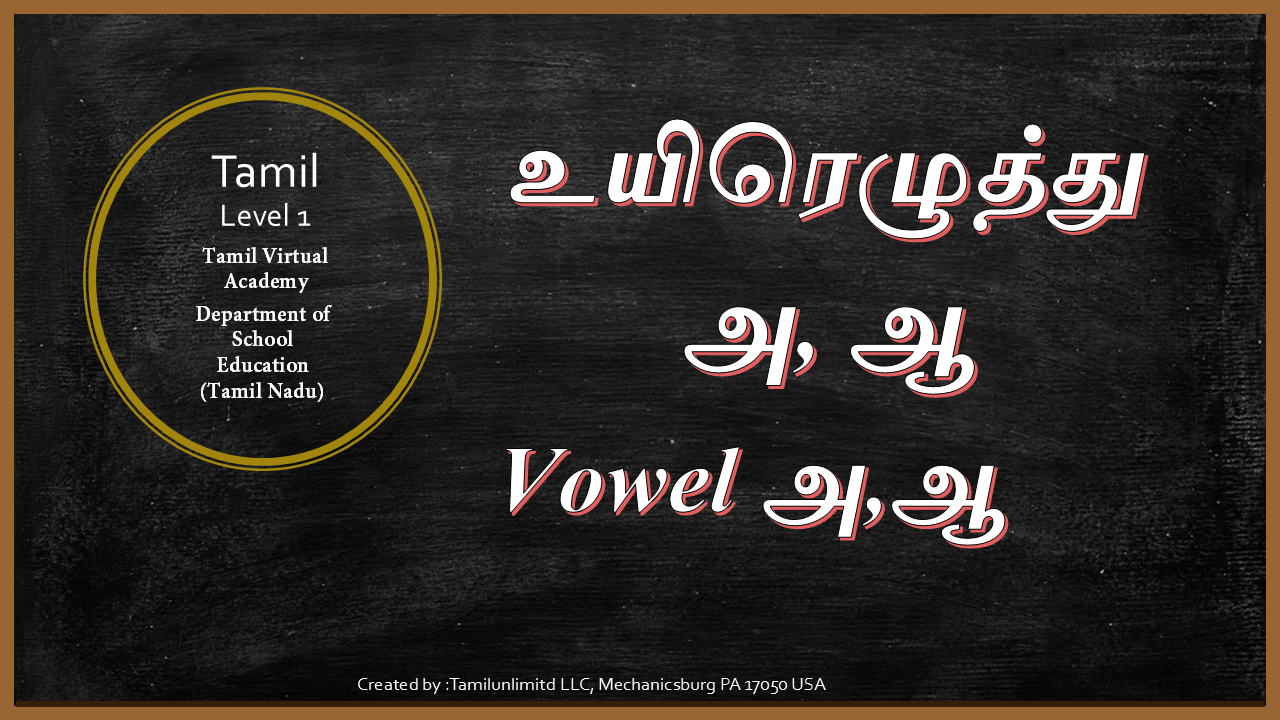
    This slideshow covers all the words in Akaram Semester 1, pages 2 to 5, and the words from 1st standard Tamil of the Department of School Education (Tamil Nadu).

       The textbook teaches basic vocabulary as sight words.

    This slideshow tool attached takes the learning beyond visual memorization of the words. These tools help the learners pronounce each letter. It encourages them to be independent readers. The color-coded letters help students visually distinguish the types of letters. In English they know only vowels and consonants. The color-coded letters can be a way of introducing letters of Tamil in the classroom.

  • Vowel Words for Tamil Pronunciation

    Vowel Words for Tamil Pronunciation

    English has 20 vowel sounds. Short vowels in the IPA are /ɪ/-pit, /e/-pet, /æ/-pat, /ʌ/-cut, /ʊ/-put, /ɒ/-dog, /ə/-about. Long vowels in the IPA are /i:/-week, /ɑ:/-hard,/ɔ:/-fork,/ɜ:/-heard, /u:/-boot. Diphthong vowels in the IPA are /eɪ/-place, /oʊ/-home, /aʊ/-mouse, /ɪə/-clear, /eə/-care, /ɔɪ/-boy, /aɪ/-find, /ʊə/-tour.

      Here are the English words listed for the correct pronunciation of Tamil vowels

    அ  (/ă/) as in alligator, (/ŭ/) as in umbrella, /æ/ as in pat, /), (/ʌ/) as in some, much

    ஆ  (/ŏ/)as in  Octopus,(/ɒ/) as in boy, bought, dog, hot(/ɑ:/) as in ask start, laugh (/ɔj/) as in walk

     இ  (/ĭ/), as in bit, hid, iguana

    ஈ (/ē/) as in    beat, eagle, heed (/i:/) week         

    உ   ( /ŏŏ/) as in book, hood. It is a variant vowel in English./ʊ/ as in book, hood, put

    ஊ /u/ (/u:/)  /ʊə/ who, boot

    எ/ĕ/as in egg,  /e/ as in bet, pet, head

    ஏ /ā/ as in hay /eɪ/ as in place

    ஐ /aɪ/ hide, bite

    ஒ/ŏ/hoe, boat

    ஓ  /ō/,/ɔ:/ /oʊ/ oval, toe, know, road

    ஒள[aw] /ow/ /aʊ/ <ou> how, bout

    Learners and Educators of Tamil can by the Picture Board book

    Tamil Vowels for Toddlers

    Product Details:

    Hardback
    8 x 8 inches
    30 pages
    ISBN: 979-8-9909905-4-

    Price: .00

    Key Features: Alphabets & Writing Systems in Tamil for Toddlers

    Buy this book in Amazon

     Tamil vowels with IPA pronunciation guide, A great tool, teaches the Tamil vowels along with basic vocabulary. There is a transliteration pronunciation guide for self-learning for beginners. A must for Tamil schools.

  • தமிழ் உயிரெழுத்துகளின் உச்சரிப்பு விளக்கப்படம்:IPA based Phonic Chart for Tamil

    தமிழ் உயிரெழுத்துகளின் உச்சரிப்பு விளக்கப்படம்:IPA based Phonic Chart for Tamil

    பன்னாட்டு ஒலிப்பு உச்சரிப்பு வரிவடிவ விளக்கப்படத்தில் மொழியியல் கொள்கைகளை அடிப்படையாகக் கொண்ட ஒலியியல் குறியீடுகள் உள்ளன. தமிழ் உயிரெழுத்துக்களை ஆங்கில உச்சரிப்புடன் இணைக்க இவ்வொலியியல் குறியீடுகளைப் பயன்படுத்தியுள்ளோம். ஆங்கில உயிரெழுத்துக்கள் ஐந்தும் வெவ்வேறு உச்சரிப்புகளைக் கொண்டுள்ளன. தமிழில், ஒவ்வொரு உயிர் ஒலியின் தனி  உச்சரிப்புக்கும் ஏற்றபடி வேறுபட்ட எழுத்து வடிவம் உள்ளது. தமிழ் உயிரெழுத்துகளின் உச்சரிப்பு விளக்கப்படம்  இரண்டு கருத்துக்களையும் இணைக்க உதவுகிறது.

     தமிழில் ஐந்து அடிப்படை உயிரெழுத்து ஒலிகள் உள்ளன, இ(/ă/), இ (/ĭ/), உ (/ŏŏ/), எ (/ĕ/), ஒ (/ŏ/). இவை குறுகியோ நீண்டோ ஒலிக்கலாம்.ஒவ்வோரு ஒலியின் அளவிற்கும் தனித்தனி உயிரெழுத்துக்கள் அவற்றின் உச்சரிப்பு நீளத்தைக் குறிக்க தனித்துவமான வடிவங்களைக் கொண்டுள்ளன.

    தமிழ் மொழியில்  ஐந்து குறுகிய உயிரெழுத்துக்களும் ஏழு நீண்ட உயிரெழுத்துக்களும் உள்ளன. உயிரெழுத்துக்கள் உச்சரிக்க ஒரு வினாடி எடுக்கும் போது, அவை குறுகிய உயிரெழுத்துக்கள்.  இக்குறுகிய குறுகிய உயிரெழுத்துக்கள்  குறில் என அழைக்கப்படுகின்றன. குறில்கள் ஒரு அடிக்கோடிட்டுக் காட்டப்பட்டுள்ளன,ஒரு அடிக்கோடிட்டுக் கொண்ட எழுத்து என்பது ஒரு குறுகிய ஒலி அந்த எழுத்தை ஒலிக்க ஒரு வினாடிநேரம் எடுத்துக் கொண்டால் போதும் என மாணவர்களுக்கு விளக்கவும்.. உயிரெழுத்துக்களை  உச்சரிக்க இரண்டு வினாடிகள் ஆகும்போது, அவை நெடில் என்று அழைக்கப்படுகின்றன.  விளக்கப்படத்தில் நெடில் உயிரெழுத்துக்கள் இரட்டை அடிக்கோடிட்டுக்களைக்  கொண்டு அடையாளப்படுத்தப்படுகின்றன.

     தமிழ் உயிரெழுத்துக்களில் இரண்டு புணரொலிகள் உண்டு.  அவை இரு  வேறுபட்ட எழுத்துகளின் இரண்டு ஓசைகள் கலந்து ஒரு ஓசையாக ஒலிப்பது  புணரொலியாகும். “ஒரே உயிரொலியுடைய ஈரெழுத்து இணையுயிர்” என்று தேவநேயப் பாவாணர் தன்னுடைய இயற்றமிழ் இலக்கண நூலில் குறிப்பிடுகின்றார்.

    அ(/ă/)மற்றும் இ(/ĭ/) உயிரெழுத்து ஒலிகள் ஐ(/a ɪ/) எழுத்துக்குள் உள்ளன.  அ(/ă/) மற்றும் உ (/ŏŏ/) உயிரெழுத்து ஒலிகள் ஔ அசையில் உள்ளன  . இந்த இரண்டு புணரொலிகளும் நீண்ட உயிரெழுத்துக்கள்.

    புலம்பெயர்ந்த தமிழ் வகுப்பறையில்  தமிழ் கற்றலுக்கான வளங்கள் தேவை. இந்த கருவிகள் குழந்தைகள் வகுப்பறைக்கு வெளியே மொழியைப் பயிற்சி செய்வதற்கான குறிப்பாக செயல்படுகின்றன. . தமிழ் உயிரெழுத்துகளின் உச்சரிப்பு விளக்கப்படத்தை எளிதாக வீட்டு அச்சுப்பொறி காகிதத்தில் அச்சிட்டுப்  பயன்படுத்தலாம்.

    தமிழைக் கற்கவும், பயிற்சி செய்யவும், கற்பிக்கவும் ஊக்கத்தோடு செயல்படுங்கள்.

    The International Phonetic Alphabet chart has phonetic symbols based on linguistic principles. We have used their method to connect the Tamil vowels to the English pronunciation. The five English vowels have different pronunciations for each one of them. In Tamil, each pronunciation has its own letter form. The IPA-based Phonic Chart for Tamil helps the Tamil education community to connect both the concepts. There are five basic vowel sounds in Tamilஅ(/ă/), இ(/ĭ/), உ(/ŏŏ/), எ(/ĕ/), ஒ(/ŏ/). These sounds can be short and long. Short and long vowels have distinct forms to denote their pronunciation length. There are five short vowels and seven long vowels. When vowels take one second to pronounce, they are short vowels. A letter with one underline means it is a short sound. When vowels take two seconds to pronounce, they are long vowels. The letter with double underlines means it is a longer sound.

     Tamil vowels have two diphthongs. ஐ(/aɪ/)  and ஒள (/aw/).  அ(/ă/)and இ(/ĭ/) vowel sounds are within the ஐ(/aɪ/) syllable.  அ(/ă/) and உ (/ŏŏ/) vowel sounds are with in the ஔ syllable. These two diphthongs are also long vowels.

    A diaspora Tamil classroom needs tools that make it easy for the children to carry the learning tools   with them. These tools function as a reference for children to practice the language outside the classroom. This IPA-based phonic chart for Tami can be printed on a regular printer paper for ease of use.

    Inspire to learn, practice, and teach Tamil.

  • பாடம் 1.1 பேசுவோம்

    பாடம் 1.1 பேசுவோம்

    தமிழ் அகரம் முதல் பருவம் தமிழ் இணையக் கல்விக்கழகம்

    எழுத்துகளின்  வடிவம் சித்திரமாகவும் அதன் ஒலி ஓசையாகவும் ஒன்றோடொன்று தொடர்பு கொண்டு சொற்களை உருவாக்கம் ஒருவ்வொரு பொருளும் நோக்கமும் இருக்கும். இவ்வெழுத்துகளின் தொகுப்பு  சொல்லையும் சொற்ககுப்பு ஒரு வாக்கியத்தை உருவாக்குகிறது. வாக்கியத்தில், ஒவ்வொரு வார்த்தைக்கும் ஒரு வேலை உள்ளது. தெளிவான, பிழை இல்லாத தகவல்தொடர்புக்கு மேலே உள்ள கூறுகள் எவ்வாறு செயல்படுகின்றன என்பதை இலக்கண விதிகள் குறிப்பிடுகின்றன.

     இலக்கண விதிகள் அன்றாட வாழ்க்கையில் தெளிவான தொடர்பு மற்றும் வெளிப்பாட்டிற்கு உதவுகின்றன. ஒலியியல், சொற்பொருள், தொடரியல், உருவவியல் யதார்த்தமான தர்க்கரீதியான பயன்பாடுகள். மொழியின் இறுதி இலக்கு ஒவ்வொரு நபரின் தேவைகளுக்கும் பொருந்தக்கூடிய வகையில் பயன்படுத்தப்பட வேண்டும். எனவே, ஒவ்வொரு தனிநபரும் ஒரு தனித்துவமான, தனித்துவமான வழியில் மொழி கற்றலைக் கற்றுக் கொள்ள வேண்டும்.

    மாணவர்களும் அவர்களின் கற்றல் பாணிகளும் அவர்களின் தனிப்பட்ட தேவைகளுக்கு ஏற்ப வேறுபடுகின்றன, குறிப்பாக அவர்கள் இரண்டாவது அல்லது மூன்றாவது மொழியைக் கற்றுக்கொள்ளும்போது. அவர்கள் அம்மமொழி திறன்களை உருவாக்கத் தங்கள் தாய்மொழி திறன்களைப் பயன்படுத்தலாம். புலம்பெயர்ந்த குழந்தைகளுக்கு, அவர்களின் தாய்மொழி அவர்களின் முதல் மொழியாக இருக்காது.  எனவே, அவர்கள் தங்கள் சொந்த மொழியை இரண்டாவது மொழியாகப் கற்றுக்கொள்ளும்போது, மொழியைக் கற்றுக்கொள்ளவும் தங்கள் வாழ்நாள் முழுவதும் அதைப் பயன்படுத்தவும் எழுத்துக்கள் மற்றும் சொற்களை மனப்பாடம் செய்வது போதாது. அவர்களுக்கும் அவர்களின் சுற்றுப்புறங்களுக்கும் அந்நியமான தாய்மொழியைப் பெறுவதற்கு அவர்களின் தற்போதைய மொழித் திறன்கள் பயன்படுத்தப்பட வேண்டும்.

    அவர்கள் ஏற்கனவே தங்கள் முதல் மொழியில் அறிவையும் அனுபவத்தையும் பெற்றுள்ளனர்; எனவே, தாய்மொழியின் சுய கற்றலை எளிதாக்க அவர்களின் தற்போதுள்ள முதல் மொழி திறன்களுடன் இணைக்கும் கற்றல் வளங்கள் அவர்களுக்கு தேவை.

    இந்த வலைப்பதிவில் உள்ள தமிழுக்கான இந்த கல்வி ஆதாரங்கள் ஒவ்வொன்றும் வார இறுதி தன்னார்வத் தமிழ் ஆசிரியர்களுக்கு மாணவர்களுக்கு ஈர்க்கக்கூடிய வீட்டுப்பாடத்தை வழங்க உதவுகின்றன. தமிழக அரசின் தமிழ் இணையக் கல்விக்கழகத்தின் பாடப்புத்தகங்களே பணித்தாள்களுக்கான ஆதாரமாகும். இந்தப் பாடப்புத்தகங்களைப் பயன்படுத்தும் புலம்பெயர் தமிழ் குழந்தைகள் தமிழை இரண்டாம் மொழியாகப் கற்கின்றனர்.

     இதுதான் பாடப்புத்தகம். முதல் பாடம் எழுத்துக்கள் அ முதல் உ  ஆகிய எழுத்துகளையும்  அவற்றுடன் தொடர்புடைய சொற்களஞ்சியத்தை  கற்பிக்கிறது.

    இப்ப்டத்திற்கான வளங்களா காட்சி வில்லை  ஆவணமும், Avery Blank rectangle labels #943ல் ஆசிரியர்கள் அச்செடுக்க உதவியாக   கையடக்க ஆவணமாகவும் இணைக்கப்பட்டுள்ளது.

    தமிழ்  கற்றல் கற்பித்தலில் ஈடுபட்டு ஆனந்தமும் வளமும் பெறுங்கள்.

    The phonics and the corresponding letters are the oral and visual tools. The interconnectivity of these two makes the words. Each letter will have a meaning and purpose. A collection of those words makes a sentence. In the sentence, each word has a job to perform. The grammar rules specify how the above elements work for clear, error-free communication.

     Grammar rules help with clear communication and expression in everyday life. Phonics, semantics, syntax, morphology, and realistic logical applications. The language’s end goal is to be used in a way that makes sense and fits each person’s needs. Thus, every individual must learn and practice language learning in a unique, custom way.

    Students and their learning styles differ according to their individual needs, especially when they are learning a second or third language. They can use their inborn native language skills to build on their second and third language skills. For diaspora children, their native language may not be their first language.  So, when they are learning their native language as a second language, mere memorization of letters and words is not enough to learn the language and apply it throughout their lifetime. Their existing language skills need to be used to acquire the native language that is foreign to them and their surroundings.

    They already possess knowledge and experience in their first language; therefore, they require learning resources that connect with their existing first language skills to facilitate their self-learning of the native language.

    Each of these educational sources for Tamil in this blog helps the weekend volunteer Tamil teachers in giving engaging homework to the students. The resource for the worksheets is the textbooks from the Tamil Virtual Academy of the Tamil Nadu government. The diaspora Tamil children who are using these textbooks are learning Tamil as a second language. 

     This is the textbook. The first lesson teaches letters அ to உ and their related vocabulary. 

    One is PowerPoint. The other is a printout for flash cards for  Avery Blank rectangle labels #94343,

    Enjoy teaching and learning Tamil.

error: Copyrights: Content is protected !!